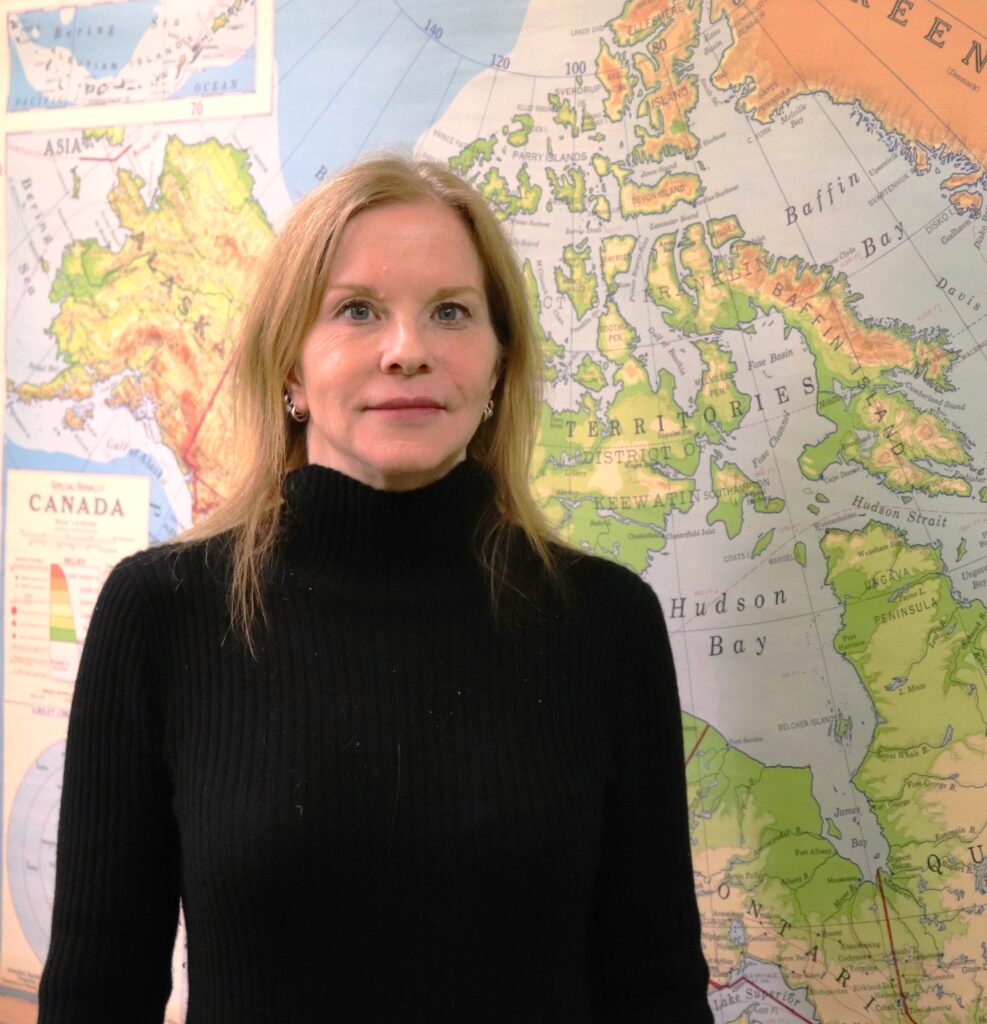
Dear Friends,
Greetings from the Computer Sciences building! We moved into our temporary—or ‘swing’—space here over the summer. It’s no Science Hall. But we are adjusting, thanks in no small part to the hard work of our Department Administrator, Jacqueline Wild, and our Administrative Assistant, Mariah Gorman. Planning for the renovation of Science Hall will be completed this semester and we are on track to return in 2029.
New digs are not the only source of chaos the department faces this fall. This is a transition period for university leadership; we are seeking a new UW System President, UW-Madison Chancellor and a new Dean of Letters and Sciences. All of which is taking place in a continuing landscape of uncertainty, where funding has constricted and higher education continues to be under attack.
Amidst this chaos, I continue to be deeply appreciative of the collegial and supportive nature of the department. It is truly an honor and privilege to serve as chair. Further, I remain in awe of the incredible research, teaching and outreach of my faculty, staff and student colleagues.
Our faculty continue to be recognized for their outstanding contributions to research, teaching and mentoring.
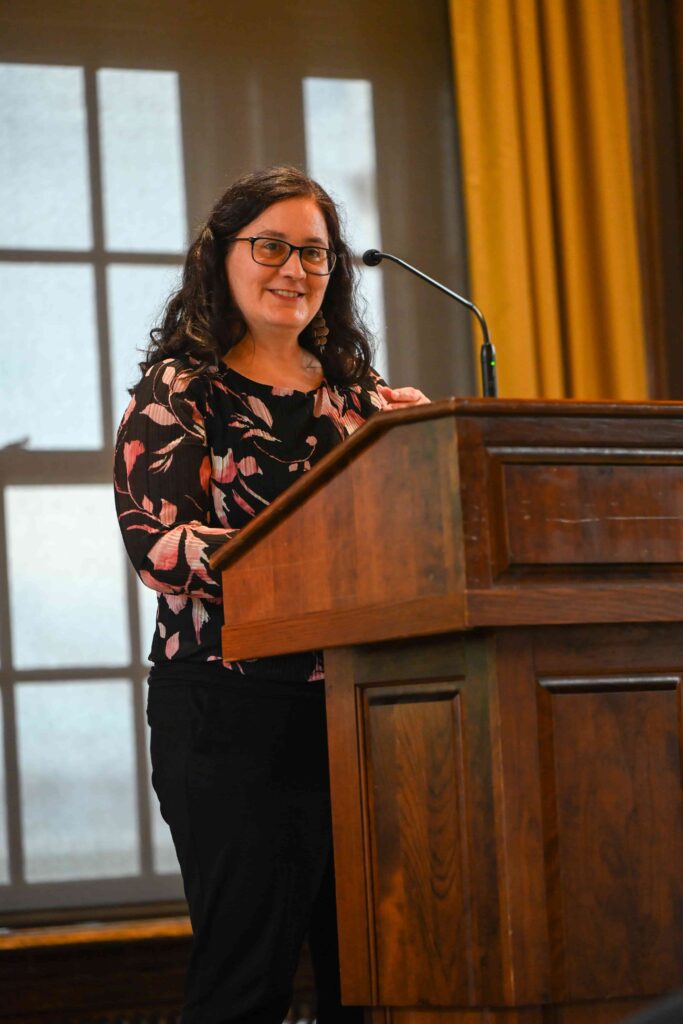
- This past summer, Dr. Ian Baird was one of 16 faculty across campus to receive a Kellett Mid-Career Award, which recognizes faculty who have made key research contributions in their fields. Ian’s longstanding field work in the Mekong River Basin has contributed greatly to our understanding of the environmental and social impacts of hydropower dams in the Mekong River Basin, among other topics.
- Dr. Erika Marín-Spiotta’s exceptional career-long work in mentoring, supporting and advocating for graduate students across UW and beyond was recognized with one of six inaugural, campus-wide Faculty Awards for Excellence in Graduate Student Mentoring. In addition to her excellent mentoring of her lab group, Erika has been a leading voice for equity in science, technology, engineering, and math as well as an internationally recognized scholar in biogeography.
- Dr. Qunying Huang was recognized with an American Association of Geographers (AAG) Fellows award, which honors significant contributions to the advancement of the field of geography. Qunying’s research focuses on using large-scale geographic data and artificial intelligence (AI) to enhance our ability to study complex spatial systems with greater precision, scale, and timeliness.
- Dr. Jack Williams received the Karl and Elisabeth Butzer Award for Lifetime Achievement in Paleoenvironmental Change, which will be awarded at the AAG annual meeting in New York in February 2027 for his career-long contributions to paleoclimatology. An example of his work and impact on the field can be seen in his co-authorship on a major report from the National Academies of Sciences, Engineering, and Medicine, titled “A Synthesis Center for Paleoenvironmental Records of Extreme Events.”
We also celebrated the promotions of Lisa Bhungalia to Associate Professor with Tenure and Song Gao to Full Professor. Hearty congrats to both!
Last year, we rolled out the department’s new Geospatial Data Science Certificate, which represents a useful credential for students. This was met with widespread enthusiasm among undergraduates, given the growing importance of data science in geospatial careers. One hundred undergraduates enrolled in the certificate—this included a lot of our Cart/GIS majors, as well as Data Science students. It also attracted students from fields where geospatial technologies and data science are becoming increasingly important, such as urban planning, atmospheric and oceanic sciences, and environmental science, among others. Thanks to Joel Gruley, Undergraduate Advisor, for helping students enroll and to him, Bill Limpisathian, Qunying Huang and Jack Williams for developing the certificate.
The UW Cart Lab and the State Cartographer’s Office both played key roles in OpenStreetMap’s annual US conference, State of the Map US, which took place in Madison this summer. PhD student Gareth Baldrica-Franklin was the keynote speaker with a talk titled “Engaging with the Local Landscape: The Story of Mapping Teejop” and State Cartographer Howard Veregin introduced attendees to the state with a welcome address. Many Cartography/GIS students in the department took advantage of the opportunity to attend, network, and learn at this event.
As a special aside, last May Howard Veregin also published Dog 137, a novel set among World War I chemical warfare experiments performed on dogs in a large, imposing brick building. It is worth remembering, as we miss Science Hall, that we must remember to take the bad with the good when it comes to institutional history.
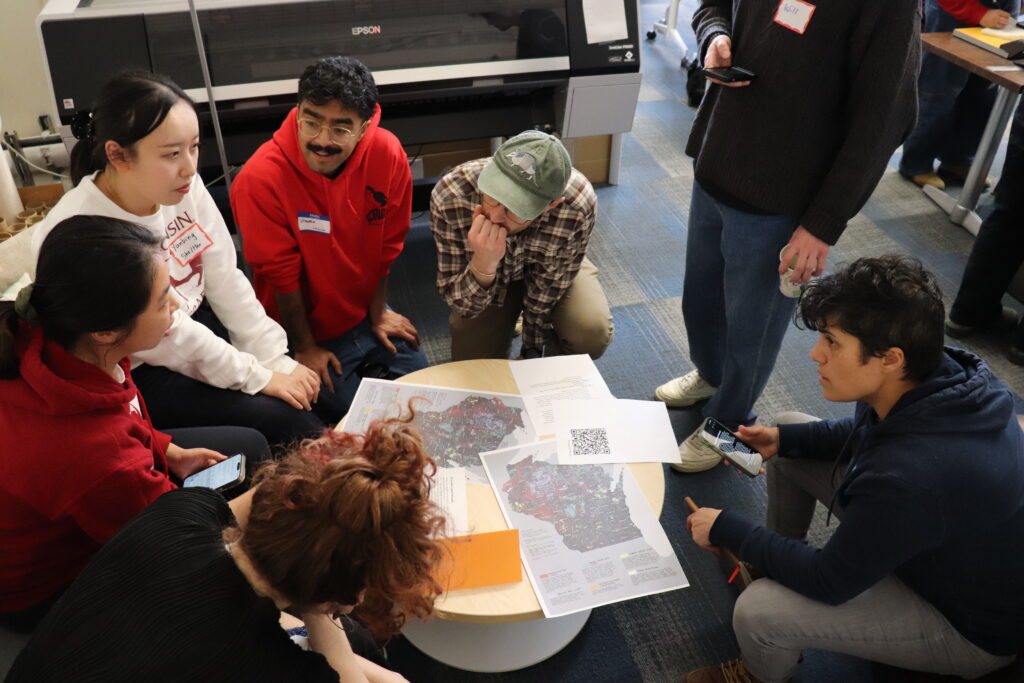
In a similar spirit, the 12th Annual Cartography Lab Design Challenge, organized by Gareth Baldrica-Franklin, Alicia Cowart, Bill Limpisathian and Rob Roth in spring 2026, undertook the topic of Visualizing Dispossession, Envisioning Land Back with Design Challenge partners Ruth Goldstein, Caroline Gottschalk, Kasey Keeler, and Joseph Mason. These faculty and graduate student were part of an NEH funded collaborative that has conducted a wider examination of campus’s problematic history of participation in dispossession of Native American groups in Wisconsin and beyond, which they shared with the department in a spring Yi-Fu Tuan lecture.
In fact, Dr. Joe Mason appeared in two spring Yi-Fu lectures, one for the Design Challenge and his farewell lecture, Histories of Ordinary Landscapes, which was a fitting close to Yi-Fu lectures in Science Hall 180 (for now). Joe will be retiring this January, after 23 years on the faculty and 27 years total in the department. The place was packed to the rafters with current and past colleagues and students! We all enjoyed hearing about Joe’s scholarship and the personal history that brought him to his internationally geomorphology research on the Midwest, the Great Plains and China. We thank and congratulate Joe on an accomplished research career and will miss his teaching, mentoring and wise counsel.
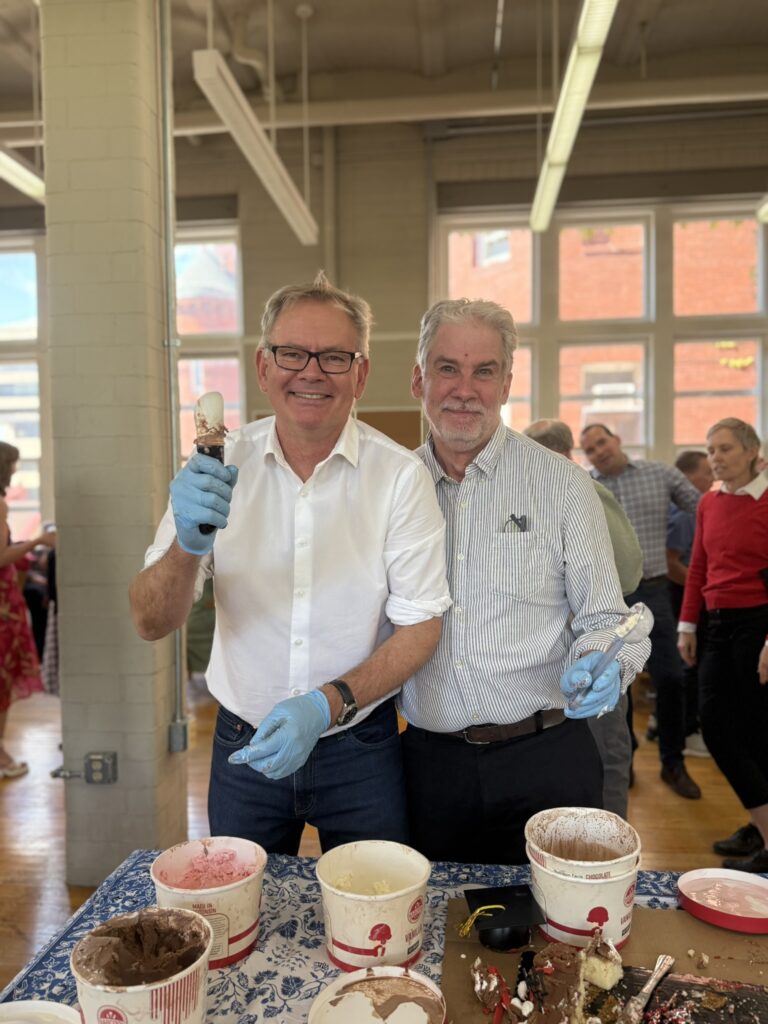
We will also be saying goodbye—or at least happy retirement—in the coming year to two other senior faculty, Matt Turner and Kris Olds. We likewise thank them for their innumerable contributions. Stay tuned to the newsletter for more moments of celebration with and for these amazing colleagues.
Stay tuned, also, for information on our 100th anniversary celebration to come in 2028. We are in the early stages of planning at the moment, but I suspect time will fly by so keep an eye out for more information on how you can contribute and participate. Meanwhile, we will once again be asking for your support in our annual Fill the Hill campaign on October 1 and 2.
Finally, I extend my sincere appreciation to all our alums, friends and donors. Unfortunately, we continue to need your support more than ever! I recognize and value the commitment it takes to contribute, especially as so many of you also face challenges this year. You are an important part of our community.
All my best,
Sarah