All lectures are presented in 1240 Computer Sciences every Friday at 3:30 PM. Alumni, friends and the public are always invited to attend.
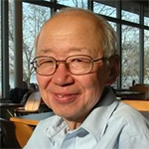
 September 25th– Small Meat Processors, Big Labor Problems: The Production of Scalar Irresponsibility for Workers in Midwest Agrifood Systems
Assistant Professor Michaela Hoffelmeyer, University of Wisconsin-Madison
Research on agrifood consolidation often presents decentralized, competitive food systems and small-scale processors as beneficial for consumers, farmers, communities, and the environment. Yet less attention has been paid to what small-scale production means for workers. Drawing on eight months of ethnographic fieldwork, including over 700 hours of participant observation and interviews with workers and managers at two small-scale meat processing plants in Iowa, this research examines how workers navigate labor control, inadequate training, failing equipment, and limited institutional support. I develop the concept of scalar irresponsibility to explain how the social and legal construction of small-scale operations can render workplace violence illegible. Workers navigated labor control, inadequate training, failing equipment, and weak regulatory and organizational protections largely on their own. These findings demonstrate how scale can facilitate worker precarity, highlighting the need for interventions that address violence and accountability across all scales of agrifood production.
October 16th– Design Geographies & Under Pressure with a Q&A session
 Design Geographies
Associate Professor Javier Arbona-Homar, UC-Davis
Consider dust explosions. What is a dust explosion; what powderized materials can combust? At what particulate scale does a material become dust and not simply a singular explosive artifact? One should begin, precisely, with all the necessary definitions. Yet confusions pile-up immediately. Scalar problems abound. Hazards researchers add new materials to a seemingly infinite list of so-called killer dusts. A lay audience might be surprised to learn that something as benign as flour or tea can accumulate in such amounts that it can become a combustible cloud. In the past half century, dust explosions have killed over a thousand workers (miners, mill workers, and factory employees, among others). From the beginning of modern industrialization, airborne dust instantly turns a staple like sugar—in addition to toxic chemicals, metals, and plastics—into a deadly weapon against labor. Industrial research documents dust explosions going back to the 1880s, but it took approximately a century to design the form of the problem: a pentagon, or five conditions, of dust explosions. In conversation with Kai Bosworth, thinking together about geographies of confinement, I draw on new directions in explosivity studies to focus on instances of graphic design as attempts to contain dust.
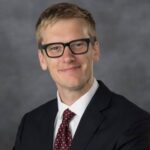 Under Pressure
Associate Professor Kai Bosworth, Virginia Commonwealth University
On August 25, 2026, the Enbridge Line 5 pipeline released 31,000 barrels of propane and butane gas into the atmosphere after a truck rolled into a pipeline construction site. The cloud of gas released into the atmosphere was eventually contained and burned off; construction resumed a few weeks later. Five years earlier in northern Minnesota, Enbridge’s Line 3 replacement inflicted a different form of pressure-release, when it was discovered that subsurface construction severed a series of confined aquifers across the state. This brief talk considers the social and material elements of such pressure-release through a juxtaposition with Javier Arbona-Homar’s investigations into explosivity. I consider whether pressure has been a particularly difficult concept for contemporary geographers and environmental humanists to comprehend, given a foregrounding of fluid relationality is suspicious of any confinement.
 November 13th– From Content to Working with Others: Reimagining Geoscience Education Through Collaboration
Assistant Professor Samuel Cornelius Nyarko, Indiana University-Indianapolis
The Nature of Geoscience (NOGs) draws on interdisciplinary expertise, meaningful engagement, and negotiation. This talk will feature a body of empirical research conducted in the Earth Sciences Education Research Lab examining the role of collaborative learning in geoscience education and workforce preparation. Across more than four years of studies on Community of Practice (CoP) through the lens of NOGs, a consistent theme that “teamwork and community are central to how geoscience is practiced” has emerged. We are seeing a growing trend where students, educators, and employers value collaborative skills in geoscience while emphasizing that these competencies have been assumed in education rather than opportunities to build strong contextual foundation. I will further highlight implications for preparing students for authentic collaborative geoscience practice from scholarship of teaching and learning examples.

November 20th– AI for Earth Observation: From Data Infrastructure to Environmental Intelligence
Professor Wenwen Li, Arizona State University
This talk presents recent advances in AI for Earth Observation, following a path from data infrastructure to foundation models and environmental intelligence. I will discuss how AI-ready cyberinfrastructure can improve the discovery, integration, and use of large-scale geospatial data, and how Geospatial AI connects Earth observation, environmental science, and AI to support societally important applications such as Arctic permafrost monitoring and disaster resilience. The talk will also highlight opportunities and challenges in building trustworthy, scalable AI systems for near-real-time environmental monitoring and decision-making.